









Are you planning a bathroom renovation in Cranleigh but terrified of an unfortunate leak destroying your ceiling below?
Are you worried about whether wet rooms are safe for your family, if buying online will delay your project by weeks, and what “luxury” actually means beyond marketing buzzwords?
This guide provides bathroom-specific clarity on realistic budgets, the critical waterproofing decisions that prevent £10,000+ disasters, and honest comparisons to help you choose wisely. You’ll discover why the work you’ll never see matters more than the tiles you will.
Our goal is simple. We want to educate you so you can make the best decision for your home, even if that means you don’t buy from us.
6 Key Insights That Will Save You Thousands on Your Bathroom Refurbishment
- Professional bathroom installation typically costs £6,500-£9,500 + VAT, with your chosen suite adding £4,000-£15,000+ depending on specification
- The biggest mistakes happen in areas you’ll never see – waterproofing and substrate preparation determine whether your bathroom lasts 20 years or fails in 2
- Understanding wet room safety trade-offs versus traditional enclosures helps families make smart decisions for their specific needs
- Where you buy your bathroom suite affects both your budget and your project timeline significantly
- Knowing what defines luxury installation helps you decide if premium specifications justify the investment
- The difference between a £13,000 bathroom and a £32,000 bathroom isn’t just about gold taps
Quick Reference: Bathroom Investment Ranges
| Specification Level | Installation Cost (Labour + Materials + Waste) | Suite & Tiles Cost | Total Investment |
|---|---|---|---|
| Mid-Range | £6,500-£9500 + VAT | £4,000-£7,000 | £10,500-£16,500 |
| Premium | £7,500-£9,500 + VAT | £8,000-£15,000+ | £15,500-£24,500+ |
| Luxury | £9,000+ + VAT | £15,000+ | £24,000+ |
Detailed breakdowns of what drives costs up or down below.
What Do We Mean by ‘Bathroom Refurbishment’?
A full bathroom refurbishment is comprehensive transformation work. It typically involves stripping the room back, first fixing new plumbing and electrics, installing new waterproofing, and creating a completely transformed space.
This isn’t just a quick refresh whilst replacing some taps and resealing the bath.
We’re talking about projects typically taking 2 to 3 weeks with skilled craftsmen working in your home daily. Understanding this scope helps you budget appropriately and identify contractors who underestimate the work required.
The outcome is a stunning new bathroom. The journey requires careful planning, realistic budgets, and critically, the right team who understands that the work behind your tiles matters just as much as the finish.
Complete 2026 Cranleigh Bathroom Guide: What We’ll Cover
- Realistic bathroom refurbishment costs and what drives prices up or down
- The catastrophic leak risks and the waterproofing protocols that prevent them
- Wet rooms versus shower enclosures for family safety and practicality
- Where to buy your bathroom suite for best value and support
- What defines luxury bathroom installation worth the premium
- Finding the most reliable bathroom fitters in Cranleigh
- Who our bathroom service is NOT the right fit for
What Bathroom Refurbishment Actually Costs in Cranleigh
Price is the question everyone asks first. It’s also the question most builders dodge with vague “contact us” promises.
We know from experience that financial uncertainty keeps many Surrey homeowners from starting projects they desperately want. Vague quotes create anxiety rather than confidence. That’s why we provide transparent pricing upfront – so you can make informed decisions without the stress of hidden costs appearing later.
Understanding realistic budgets for bathroom refurbishment requires splitting installation from materials. These are two separate cost categories you control differently.
The Installation Cost (Labour and Installation Materials)
Professional installation costs £6,500-£9,500 + VAT for a comprehensive service. This covers all skilled labour, standard installation materials like pipes and plasterboard, and complete rubbish removal.
This figure is for installation only. You purchase your bathroom suite and tiles separately, giving you complete freedom over aesthetics. This means you’re not locked into our supplier markups and can choose exactly the style and quality level that fits your budget and taste.
Your Materials Budget
Your bathroom suite, tiles, and finishes add significantly to the total. Mid-range specifications using quality brands typically cost £4,000-£7,000.
Premium specifications with designer brassware and digital showers range £8,000-£15,000+. The combined investment usually totals £13,000-£32,000 for complete transformation.
The 5 Factors That Can Double or Halve Your Bathroom Refurbishment Cost
Five specific factors determine where your quote lands in the price range.
Moving your toilet location requires significant new waste pipe runs. This can sometimes add significant labour to the timeline.
Extensive tiling increases costs substantially. Floor-to-ceiling porcelain costs more than standard ceramic tiles with painted walls.
Structural floor work can escalate quickly. Creating wet room floors or strengthening bouncy subfloors involves careful preparation.
Room size matters directly. Larger bathrooms need more materials, tiling, and flooring.
The installer type creates the widest variation. Understanding professional teams versus one-man bands reveals how your choice impacts both budget and stress levels.
The Hidden Costs That Catch You Off Guard
Budget blowouts rarely happen from quoted work. They happen from discoveries made during the rip-out phase.
Rotten subfloors from slow leaks are the number one discovery. A tiny, invisible leak can rot timber joists for years. You cannot tile over rotten wood. Replacement can often cost £520-£800 + VAT for an average bathroom.
Understanding typical hidden extras prepares you mentally and financially. Set aside 10-15% contingency for legitimate unforeseen issues.
The Catastrophic Risk: Bathroom Leaks and How to Prevent Them
This scenario keeps homeowners awake at night. You invest heavily in a stunning new bathroom, only to discover a damp patch spreading across the ceiling below six months later.
That fear of £10,000+ water damage is completely valid. Leaks aren’t just bad luck. In most cases, they’re traceable to specific installation failures. Understanding what causes bathroom leaks and prevention methods is the most important protection for your property.
Why Tiles Alone Don’t Stop Leaks
This is the single biggest misconception in bathroom design. Many people assume that if a wall is tiled, it’s waterproof.
Tiles are not waterproof. Grout between them is porous and absorbs water. Over time, water from your shower seeps through grout and reaches the wall behind. If that wall is standard plasterboard, it acts like a sponge – creating damp that rots walls and eventually causes tiles to pop off. Worse, it can rot the timber structure of your home.
The Tanking Solution (British Standard Protection)
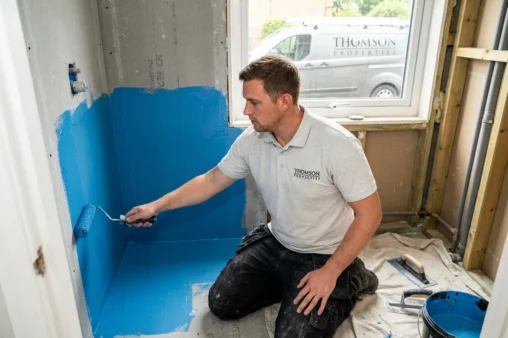
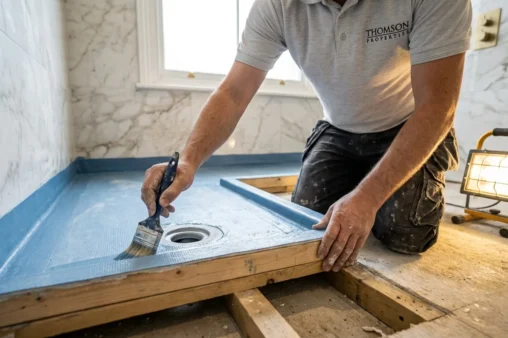
Professional installations use waterproofing membranes before any tiling begins. This process is called “tanking.”
Since 2018, British Standards recommend tanking in all domestic wet areas. It creates a completely sealed barrier behind your tiles. Even if water penetrates grout, it hits this waterproof layer and cannot reach the wall structure. This is non-negotiable for protecting your home.
The Floor Movement Problem
If your subfloor is not rigid, it flexes when you walk on it. This movement causes grout lines to crack and silicone seals to pull away. Once a seal breaks, water finds its way into the gap. This is a common cause of leaks around baths and shower trays.
Professional substrate preparation eliminates bounce. We replace old floorboards with marine-grade plywood or specialist cement boards that are dimensionally stable.
The True Cost of Leak Failures
Budget fitters often skip tanking to save two hours and £50 -150 in materials. The bathroom looks perfect for 18 months. Then the ceiling collapses. The £300 or so that you saved, turns into a much higher cost to fix the damage. Professional waterproofing isn’t an optional extra – it’s insurance against disaster.
Wet Rooms vs Traditional Shower Enclosures: The Safety Decision
This choice impacts safety, practicality, and cost significantly. Your heart likely wants the stunning, open-plan “hotel look” of a wet room. Your head is probably asking tough questions about whether it’s safe with three kids splashing around.
Understanding wet room safety versus traditional enclosures reveals critical trade-offs.
Barrier-Free Access vs Slip Risk: The Safety Trade-Off
Wet rooms eliminate trip hazards completely. Barrier-free entry makes them superior for accessibility needs – elderly relatives or mobility-impaired family members.
But wet rooms increase slip risks. The entire floor can get wet, creating larger slip hazard areas. If you choose a wet room, selecting tiles with R11+ slip-resistance rating is non-negotiable. Even when wet, the floor remains safe for little feet.
Traditional enclosures create a physical barrier. The tray and glass screens keep water contained, meaning the rest of the bathroom floor remains dry. This reduces slip risk substantially. The downside is a small step up into the tray – a potential trip hazard.
The Practicality Reality
Walk into your bathroom ten minutes after your teenager showers. Will your socks get wet?
In wet rooms, water spray travels without containment. Steam and splashes can leave towels damp and toilet rolls soggy. In busy morning routines, squeegee-ing the entire floor so the next person can use the room becomes a frustration.
Traditional enclosures excel here. They keep warmth, steam, and water inside the cubicle. The rest of the room stays dry and immediately usable.
Installation Complexity and Cost
Installing a wet room is major construction. We create floor gradients so water drains away, which often involves structural work to joists. Most importantly, more of the room must be tanked. If this unseen work is done poorly, consequences can be disastrous. A leak in a wet room can go unnoticed for months, rotting floorboards and damaging ceilings below.
Shower trays are simpler. They’re factory-sealed units designed specifically to hold water. Provided plumbing waste is fitted correctly and they are sealed well, structural leak risk is significantly lower.
Why We Recommend Traditional Enclosures for Most Family Bathrooms
From our experience with families across Surrey, traditional enclosures often work best for main family bathrooms. They offer the best balance of safety, practicality, and cost.
Philip in Guildford loved the idea of that open, luxurious hotel look. But he needed functionality for daily use without soaking the entire room. We installed a high-end enclosure instead. The result exceeded his expectations. Visitors frequently comment to hom that “it looks like a hotel bathroom.” He achieved that aspirational aesthetic with the practicality of water containment.
For luxury en-suites or accessibility needs, wet rooms are fantastic. They add real luxury and future-proof your home.
Where to Buy Your Bathroom Suite: The Support vs Savings Decision
Online retailers often show dramatically lower prices than local Cranleigh or Guildford showrooms. The price difference is real. The service difference is stark.
Comparing local showrooms versus buying online reveals how procurement choices impact both budget and project continuity.
The Price Reality
Online wins on sticker price. Lower overheads and huge buying power translate to attractive prices. You can find a complete suite online for significantly less than high street showrooms.
But watch for hidden costs. Standard delivery is often “kerbside” – you haul a heavy bath up your own driveway. Returns can be expensive too, with shipping a pallet back often falling on you.
Local showrooms charge more for products. Higher operating costs are reflected in pricing. The value comes in cost certainty – the price usually includes better service, coordinated delivery, and simpler returns.
The Installation Impact (Where Savings Evaporate)
Here’s the scenario that destroys budgets. A cracked basin is discovered just before installation.
Online response: Photograph damage, upload to portal, wait for approval, arrange return, wait 3+ days for replacement. Your project stops. Your fitter’s schedule is disrupted. You pay for their wasted time or they go off and start another bathroom for another customer. The “saving” evaporates in delay costs.
Local showroom response: One phone call. The manager can sometimes deliver replacement within the hour or arrange a next day delivery. Your project continues. Vastly reduced wasted labour costs.
We recall a Guildford project where a shower valve cartridge was faulty straight from the box. Had this been online, we’d have faced a minimum 48-hour wait. The client had bought from a local showroom. The manager drove a replacement to site within 45 minutes. We fitted it immediately. The project stayed on schedule.
That level of service is impossible with remote warehouses.
Who Should Buy Where
Online works if:
- Budget is your number one priority
- You’re confident about plumbing compatibility
- Time flexibility exists if delays occur
- You’re willing to manage returns yourself
Local showrooms work if:
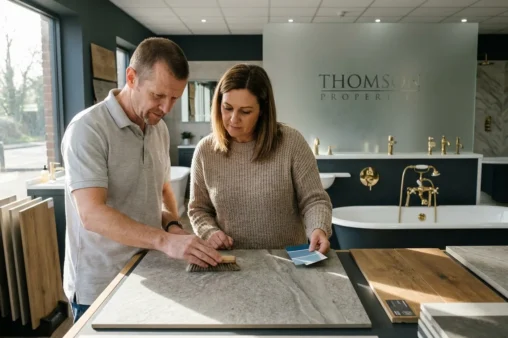
- You value tactile assessment before buying
- You want expert design input
- You need more immediate problem resolution
- Project timeline certainty matters
Our experience shows stress levels are lower with reputable local suppliers. Resolution speed makes the price difference worthwhile.
What Defines “Luxury” Bathroom Installation (And When It’s Worth It)
Marketing attaches “luxury” to everything from gold taps to fluffy towels. For homeowners planning significant renovation, this vagueness creates confusion.
Understanding what truly defines luxury installation helps you decide if premium specifications justify investment. True luxury isn’t about bling. It’s about three things: material density, unseen quality, and process excellence.
Material Density (What You Can Touch)
Standard installations use ceramic tiles and plated fixtures. They’re functional and cost-effective.
Luxury uses natural stone like marble or travertine. Beyond unique visual character, natural stone offers solidity and coolness man-made materials can’t replicate. When sealed correctly, it lasts decades.
You feel the difference in fixtures too. Solid brass versus plated plastic. Lower-cost fixtures are often hollow or zinc-plated where finish eventually peels. High-end fixtures use solid brass – noticeably heavier in your hand. Ceramic disc technology inside ensures smooth operation for decades. This engineering withstands humid bathroom environments.
Unseen Quality (What Protects Your Investment)
This is where the gap between budget and professional installation is widest. It’s also the most dangerous area to cut costs. You cannot see the work once tiles are on.
Budget fitters often skip tanking to save time and money, creating significant risk. Tile grout is water-resistant, not waterproof. Over time, moisture penetrates substrate, leading to rot, mould, and tiles falling off years later.
Premium installation mandates waterproofing membranes in all wet areas. This is insurance against future leaks.
Precision is visible in tiling too. Expert craftsmanship shows in perfectly aligned grout lines flowing from floor to wall. Budget finishes might fill wide gaps with thick silicone. A quality tiler can take four days for a room where a rusher takes two. You’re investing in that time, patience and precision.
Process as Product (The Stress-Free Journey)
For many Cranleigh homeowners, time and peace of mind are their most valuable assets. The truest definition of luxury is a stress-free process.
Standard approaches feel like juggling acts. You hire a plumber who “does a bit of tiling,” then find an electrician yourself. You become the project manager. If the plasterer cancels, your whole schedule collapses.
Luxury relies on professional management. A dedicated Project Manager coordinates all trades, ensures installation materials arrive on time, and solves problems before you know about them. This service recognises your home is your sanctuary – meaning rigorous carpet protection and non-negotiable daily cleaning.
When Luxury Pays Off (The ROI Analysis)
While mid-range installations cost less, a professionally managed, premium-bracket bathroom in our area often costs £23,000-£32,000 total. Is paying for this luxury specification worth it?
When it IS worth it:
Long-term homeowners benefit most. If you’re staying 10-20 years, investment in waterproofing and copper pipework pays for itself.
High-value properties see returns. Data suggests well-executed bathroom adds 4-5% to property value. For an £825,000 Cranleigh home, that represents £33,000-£41,000 in added value. The numbers work.
Peace-of-mind priorities matter. If you’re busy professionals valuing sanity, paying for project management is investing in stress-free living.
When it might NOT be worth it:
Property flips face timing issues. You might not recoup full costs quickly enough if selling immediately.
Budget constraints are real. If funds are tight, cosmetic updates might be smarter financially.
Understanding whether premium refurbishment adds value in Surrey’s specific market helps you decide if luxury specifications align with your goals.
The Leak Prevention Protocols That Protect Your Home
The most expensive problem happens behind the tiles. Poor waterproofing causes leaks that rot your ceiling below. Professional prevention involves three critical protocols.
Protocol 1: Comprehensive Tanking
British Standard tanking membranes create waterproof barriers. We apply this before tiling all wet areas – shower zones, bath surrounds, and floors. This isn’t optional. It’s mandatory for protecting your property investment.
Budget installations often skip this step. The bathroom looks perfect initially. 18 months later, disaster strikes. Water has been seeping through porous grout, saturating the wall cavity. Your kitchen ceiling below starts dripping. Structural damage often requires almost complete rip-out and reinstallation.
The £300 saved on tanking becomes £10,000+ in repairs. Professional waterproofing prevents this nightmare.
Protocol 2: Rigid Substrate Preparation
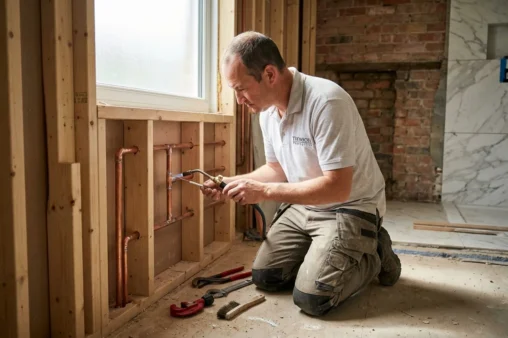
Bouncy floors crack grout lines and silicone seals. We strengthen subfloors before laying a single tile. This often means replacing old floorboards with plywood and cement boards. Specialist cement backer boards are dimensionally stable and moisture-resistant. Alternatively, we use decoupling mats which isolate the tile from any substrate movement.
We also follow a bath sealing protocol. We fill the bath with water before applying final silicone. The weight settles the bath to its lowest position. When water drains, the seal remains under compression rather than tension – preventing tearing when you use the bath later.
Protocol 3: Pressure Testing Pipework
Leaks often originate from joints that weren’t tightened correctly. A slow drip inside a wall can go unnoticed for months, causing rot and mould long before damp appears on ceilings.
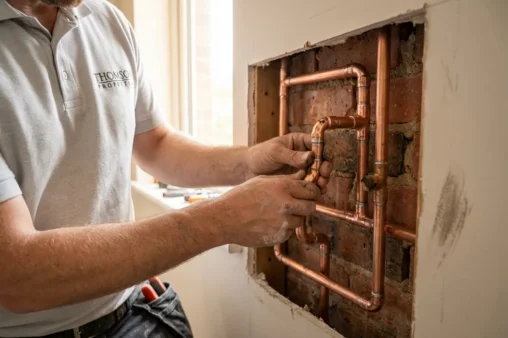
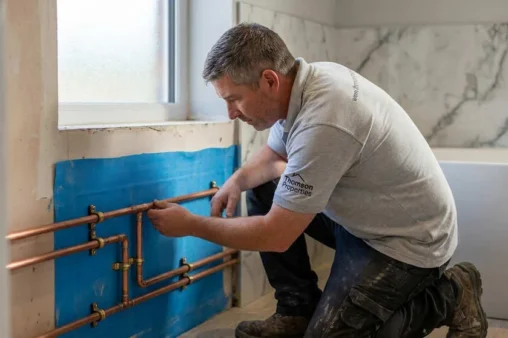
Before any pipework is concealed, we pressure test the system. We cap it and fill with water, checking every single joint for leaks. This simple but vital test identifies potential issues immediately – resolved before they can become costly problems.
Finding Reliable Bathroom Fitters in Cranleigh
Choosing your installation partner determines your stress levels. A beautiful bathroom fitted by people who disrespect your home is a nightmare. A standard bathroom fitted by a respectful team is a pleasure.
Identifying reliable bathroom fitters locally starts with understanding what reliability actually means.
The Four Reliability Pillars
Verifiable track record matters most. Look for consistent, recent reviews on Checkatrade, Google, and Houzz. Read what people say about the people – do they mention fitters by name?
Transparent process builds confidence. Professional companies provide detailed quotes, not vague one-liners. They explain exactly what’s included and have clear protocols for unforeseen issues.
Contingency plans eliminate single-point failure. What happens if the fitter is ill or his van breaks down? A sole trader has no answer. A professional team has backup resources.
Robust guarantees matter long-term. Look for written warranties on workmanship. Three years is gold standard.
Vetting for Character and Respect
Technical skill is obviously essential. But character determines whether you feel comfortable in your own home during the work.
Understanding how to find builders who respect your home starts at the first meeting. It might sound obvious but watch their feet. Did they offer to remove shoes? Did they wipe them at least? A builder who walks mud onto carpet during consultation shows you exactly how much care they’ll take during rip-out.
Listen to their questions too. A respectful professional asks about your life, not just your walls. Are they asking if you have pets? Will you be living there during work? Do you have another bathroom / toilet to use? These questions show they see a home, not just a site.
The Daily Tidiness Test
“Tidy” means different things to different people. To some builders, it means piling tools in a corner. To you, it means the floor is vacuumed and usable. You need a builder whose definition matches yours.
Best-in-class companies have non-negotiable daily protocols. They don’t just clean at the end – they clean at the end of every single day. Look for specific commitments: carpet protectors from front door to workspace, sealing off the room to manage dust, vacuuming and sweeping every evening.
Pat and Brian Crowther from Haslemere braced themselves for typical building chaos. Instead, they described the experience as a “pleasure.” They specifically noted “no mess” despite full bathroom renovation. Our fitter Ben was “quiet and polite throughout”. That’s the standard we aim for on every project.
Who Our Bathroom Service is NOT For
Radical honesty requires admitting we’re not right for everyone. If the fit isn’t there, we’d rather tell you now.
Budget is Your Absolute Priority
If lowest price trumps all other considerations, we’re not the right fit. Sole traders will undercut us. We can’t compete on cost alone.
We employ skilled craftsmen full-time, maintain a manned office, and carry comprehensive insurance. Professional management and backup systems cost money. We refuse to cut those corners.
You Want Hands-Off Design Service
If you prefer someone to choose every tile and tap for you, full design-and-supply firms are better suited. They eliminate that responsibility completely.
Our comprehensive installation model requires your active product selection. You source main items, we provide expert fitting. If decision-making feels burdensome rather than empowering, our model creates stress rather than relieving it.
You’re Comfortable Managing Waterproofing Risk
If you understand tanking requirements and can verify installation quality yourself, you might not value our obsession with unseen quality. The premium we charge for thorough waterproofing may not justify itself.
However, most homeowners lack construction knowledge. For them, our focus on work behind tiles provides critical protection.
You Flip Properties for Quick Sale
If you’re selling immediately, our focus on unseen quality may not recoup fast enough. Cosmetic updates might be financially smarter for investment properties.
Premium tanking and substrate preparation protect long-term homeowners. Flippers face different ROI calculations.
We’d rather lose your business than set you up to fail. If the fit isn’t right, we’ll tell you upfront.
Frequently Asked Questions About Bathroom Refurbishment
What’s included in your “comprehensive installation service”?
Our estimates cover all skilled labour including plumbing, electrics, tiling, and plastering. All standard installation materials like pipes, adhesive, and plasterboard are included. All rubbish removal and disposal is covered. You buy the suite and tiles from any supplier you choose.
How long does a typical bathroom project take?
Most bathrooms take 2-3 weeks depending on complexity. Small en-suites can be quicker. Wet rooms and family bathrooms with extensive tiling can take longer. We can provide clear schedules at the estimate stage.
What happens if you find rotten joists during rip-out?
We stop work immediately and show you the problem. We provide written estimates for the specific repair. We only proceed with significant work after receiving your written consent. You stay in control of budget.
Do prices include VAT?
Our labour estimates are quoted plus VAT. We’re always transparent about this upfront so you know exact totals.
Are wet rooms more expensive than traditional showers?
Yes, sometimes significantly. Wet rooms require structural floor gradients, extensive tanking, and specialist drains. They typically cost £1350-£3,000 more than traditional enclosures for installation. Material costs are similar.
Should I buy my bathroom suite before or after booking installation?
After. Book your installation date first so you know timeline certainty. Then buy your suite with delivery scheduled for the week before work begins. This prevents storage issues and delivery coordination stress.
Protecting Your Sanctuary: Your Next Step
You now understand realistic bathroom budgets, the risks poor waterproofing creates, and the critical safety decisions between wet rooms and enclosures. You know where to buy your suite for best value.
Most importantly, you understand that the work behind your tiles matters more than the tiles themselves. The unseen quality prevents disasters you’ll definitely feel.
Pat and Brian Crowther from Haslemere braced themselves for typical building work disruption. They’d heard the horror stories of dust, mess, and chaos. Instead, they described the experience as a “pleasure.” The work was carried out “superbly” with “no mess.” Our fitter Ben was “quiet and polite throughout”. That’s what respecting your home looks like in practice.
Take the First Step: Book Your Free Bathroom Estimate
If you’re in Cranleigh or the surrounding Surrey and West Sussex areas, we’d love to discuss your specific project. We offer a completely free, no-obligation estimate.
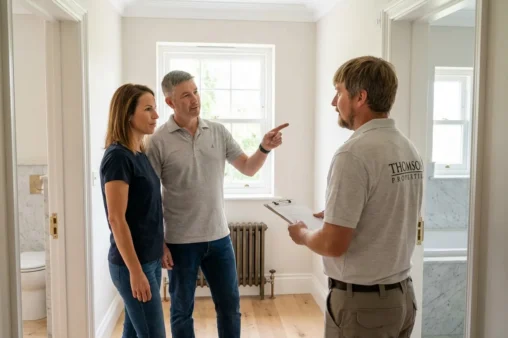
We’ll visit your home, discuss your vision, and provide detailed, transparent costs. There’s no pressure. No sales pitch. Just honest advice from people who genuinely care about getting it right.
Call us now: 01483 272440 / 01403 752857
Email: info@thomson-properties.com
Not ready to talk yet? Start by understanding what a stress-free process looks like from planning through handover.
All Articles in This Bathroom Guide
Understanding Your Investment
What is a realistic budget for a quality bathroom refurbishment in Cranleigh? Complete breakdown of installation costs, material budgets, and total investment ranges for Surrey bathroom projects.What are the typical hidden extras that push renovation costs higher? The legitimate unforeseen issues versus illegitimate vague charges, plus how professional companies handle discoveries transparently.What is a fair deposit and payment schedule for a renovation? Protect yourself from the deposit trap by understanding industry norms versus red flag warning signs.Will premium bathroom refurbishment add meaningful resale value? Honest analysis of ROI potential for Surrey’s property market and when budget installations actively devalue premium homes.Preventing Disasters
What causes bathroom leaks and how to prevent them? The three main causes of catastrophic leaks and the tanking, testing, and substrate protocols that prevent £10,000+ disasters.Wet room vs shower enclosure: which is safer and more practical? Safety, practicality, and cost comparison to help families decide which bathroom design works best for their specific needs.Making Smart Choices
Local showroom vs buying bathroom products online The true cost comparison including support quality, returns, and project delay risks when procurement goes wrong.What defines luxury bathroom installation and is it worth the cost? The material, craftsmanship, and process differences that justify premium pricing for quality-focused homeowners.Finding the Right Team
Who are the most reliable bathroom fitters in Cranleigh? Honest review of top local specialists with objective comparison of their approaches and ideal client profiles.Professional team vs one-man band vs designer: which is best? Honest comparison of three service models covering costs, risks, and who each approach suits best for bathroom renovation.Labour-only vs all-inclusive quotes: which is right for you? The trade-offs between different quoting structures and how each impacts your control and budget.Multi-skilled company vs separate tradesmen: which works better? Comparing team-based approaches to coordinating individual trades yourself, including stress and timeline impacts.How to find a builder who genuinely respects your home The vetting checklist covering interview questions, red flags, and green flags to spot before you commit to anyone.Who are trusted fitters for period properties in Guildford? Specialist guidance for Victorian and Edwardian homes requiring sympathetic approaches and technical expertise for older buildings.