It is the scenario that keeps many homeowners awake at night.
You invest heavily in a stunning new bathroom, only to discover a damp patch spreading across the ceiling below six months later.
That fear of chaos, disruption, and financial uncertainty is completely valid.
We know from experience working in homes across Guildford, Haslemere and the surrounding areas that your home is your sanctuary. The thought of water damage compromising it is stressful.
Of course, a faulty manufacturing part can catch anyone out. However, leaks are rarely just a matter of bad luck. In most cases, they are traceable to the specific installation methods used during the build.
Here is a snapshot of exactly how we ensure your home remains watertight.
Key Takeaways
- Tiles are not waterproof: Grout is porous, meaning water can seep through to the wall behind unless a specialist tanking system is used.
- Movement causes failure: If subfloors aren’t rigid, movement cracks grout and breaks seals, allowing water to escape.
- Testing is non-negotiable: Professional fitters pressure test every pipe joint before concealing it behind walls or tiles.
- Trust the person, not just the process: A guarantee is only as good as the character of the fitter installing the pipework.
The Hidden Reality of Bathroom Leaks
What we have found is that, in the vast majority of cases, leaks are the result of specific failures in materials or workmanship during the installation.
The real danger is that these failures often happen in areas you cannot see.
They occur behind the beautifully tiled walls, under the new flooring, and beneath the shower tray.
When you budget for a quality bathroom refurbishment, it is easy to focus on the visible items like the taps or the vanity unit.
However, the long-term safety of your home relies entirely on the “Seen and Unseen Quality” of the preparation and plumbing work.
You know, we once worked on a project where we witnessed first-hand the devastating impact of poor workmanship.
An elderly gentleman and his visually impaired wife had been mistreated by a rogue plumber who left their bathroom in a diabolical state.
The unseen work was so poor that it caused significant distress and damage, requiring extensive remedial action.
Seeing the impact on their lives reinforced our commitment to ensuring every job is done right the first time.
Here are the three main culprits behind bathroom leaks and how a professional installation prevents them.
Problem 1: The Waterproofing Myth (Why Tiles Aren’t Enough)
This is perhaps the single biggest misconception in bathroom design.
Many people assume that if a wall is tiled, it is waterproof.
What actually happens
Ceramic and porcelain tiles are generally waterproof, but the grout between them is not.
Standard grout is porous and absorbs water.
Over time, water from your shower seeps through the grout and reaches the wall behind it.
If that wall is made of standard plasterboard or plaster, it can act like a sponge.
It creates a damp environment that rots the wall and eventually causes tiles to pop off.
How we prevent it
We never rely on tiles alone to hold back water.
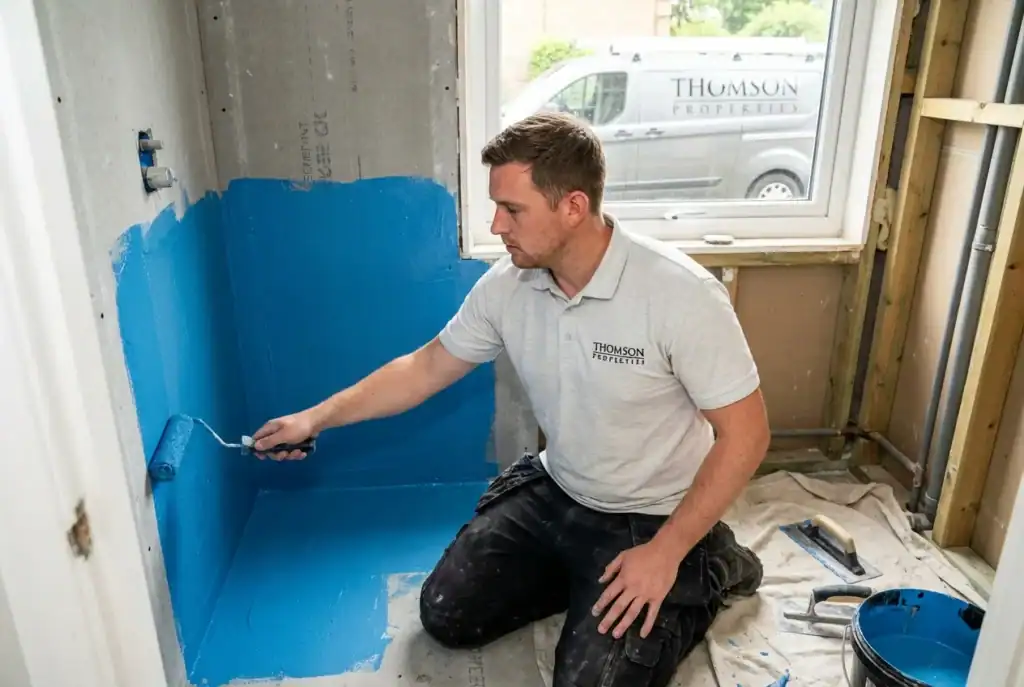
A quality installation requires a process called “tanking”.
Since 2018, British Standards have recommended that in domestic wet areas, all substrates must be protected by a proprietary tanking membrane.
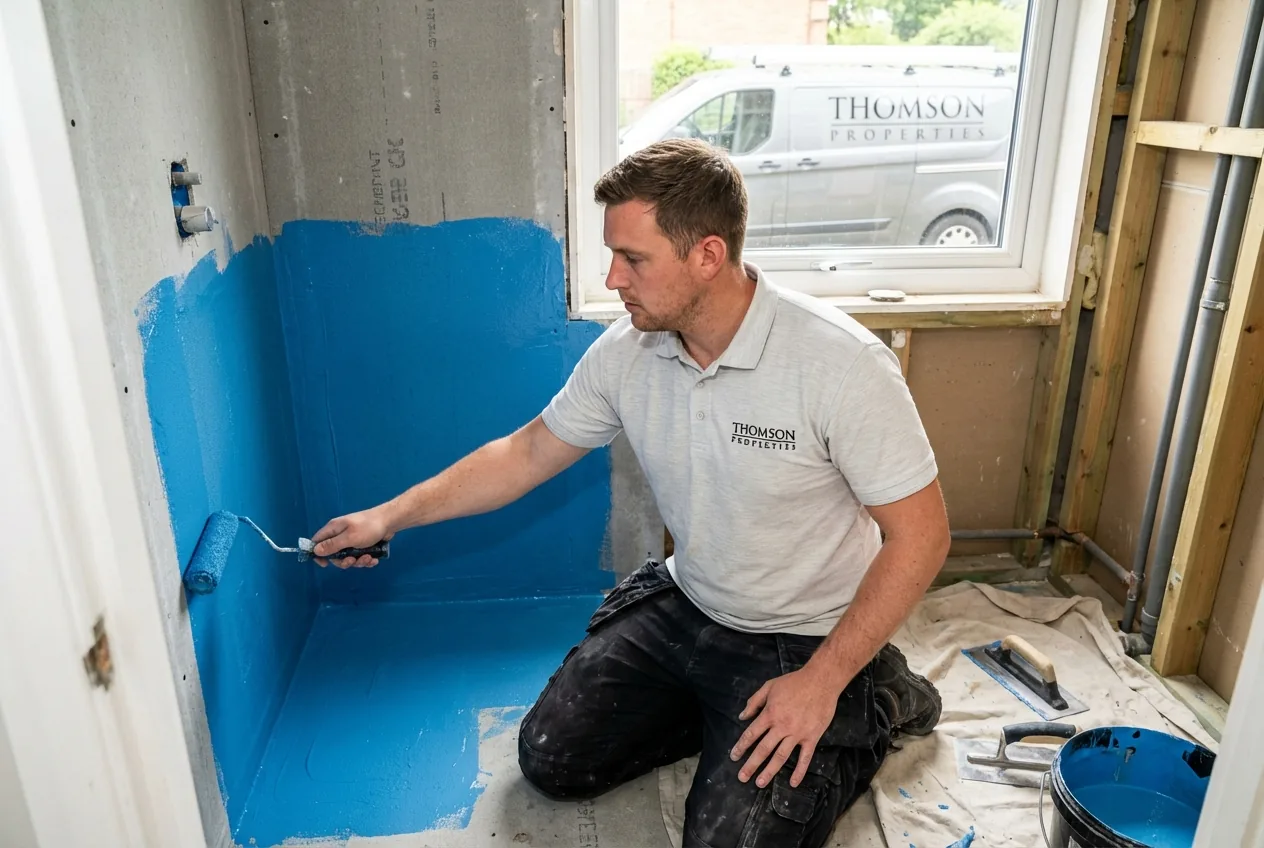
Tanking involves applying a specialist waterproof membrane to the walls and floor in wet areas before any tiling begins.
This creates a completely sealed, rubberised “tank” behind your tiles.
Even if water gets through the grout, it hits this waterproof barrier and cannot penetrate the wall.
From our point of view, adhering to these standards is a non-negotiable part of protecting your home.
This is a crucial consideration when deciding between a wet room vs. a traditional shower enclosure, as wet rooms require even more rigorous waterproofing measures.
Problem 2: Movement and The “Bounce”
Have you ever stepped on a floorboard and felt it dip slightly?
That movement is the enemy of a watertight bathroom.
What actually happens
If a subfloor is not rigid, it will flex when you walk on it or when the bath fills with water.
This movement causes grout lines to crack and silicone seals to pull away from the wall.
Once a seal breaks, water finds its way into the gap.
This is a common cause of leaks around baths and shower trays.
How we prevent it
We focus heavily on the substrate preparation.
Before we lay a single tile, we ensure the sub floor is solid.
This often means replacing old floorboards with plywood or specialist cement backer boards that are dimensionally stable and moisture resistant.
We also follow a strict protocol when sealing baths.
We fill the bath with water before applying the final silicone seal.
The weight of the water settles the bath into its lowest position.
We apply the seal, and when the water is drained, the seal remains under compression rather than tension.
This prevents it from tearing away when you use the bath later.
Problem 3: Plumbing Connections and Testing
The plumbing pipework is the veins of your bathroom, carrying water under pressure.
A loose joint here is a recipe for disaster.
What actually happens
Leaks often originate from joints that haven’t been tightened correctly or have been knocked during the fitting of cabinets.
A slow drip from a pipe joint inside a wall can go unnoticed for months, causing rot and mould long before a damp patch appears on a ceiling.
Additionally, incorrect gradients on waste pipes can lead to standing water and eventual leaks, contrary to Part H of the Building Regulations which mandates specific falls for efficient drainage.
How we prevent it
We hire for character first, skill second.
This means our fitters are conscientious professionals who genuinely care about the details.
The reason we can offer a three-year labour guarantee on all new installations, as detailed in our Charter Document, is precisely because of this hiring philosophy.
We trust the people we put in your home to do the job properly, even when you aren’t looking.
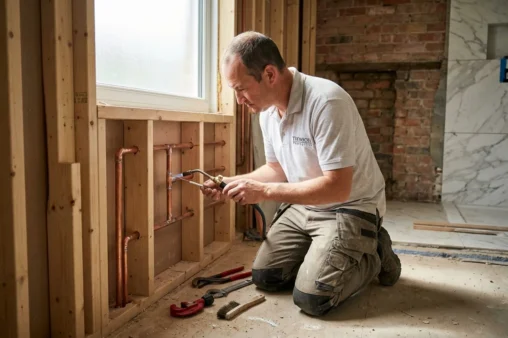
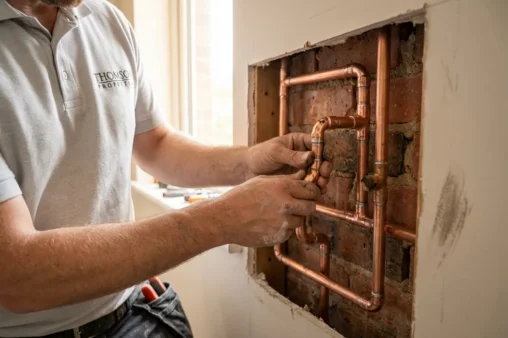
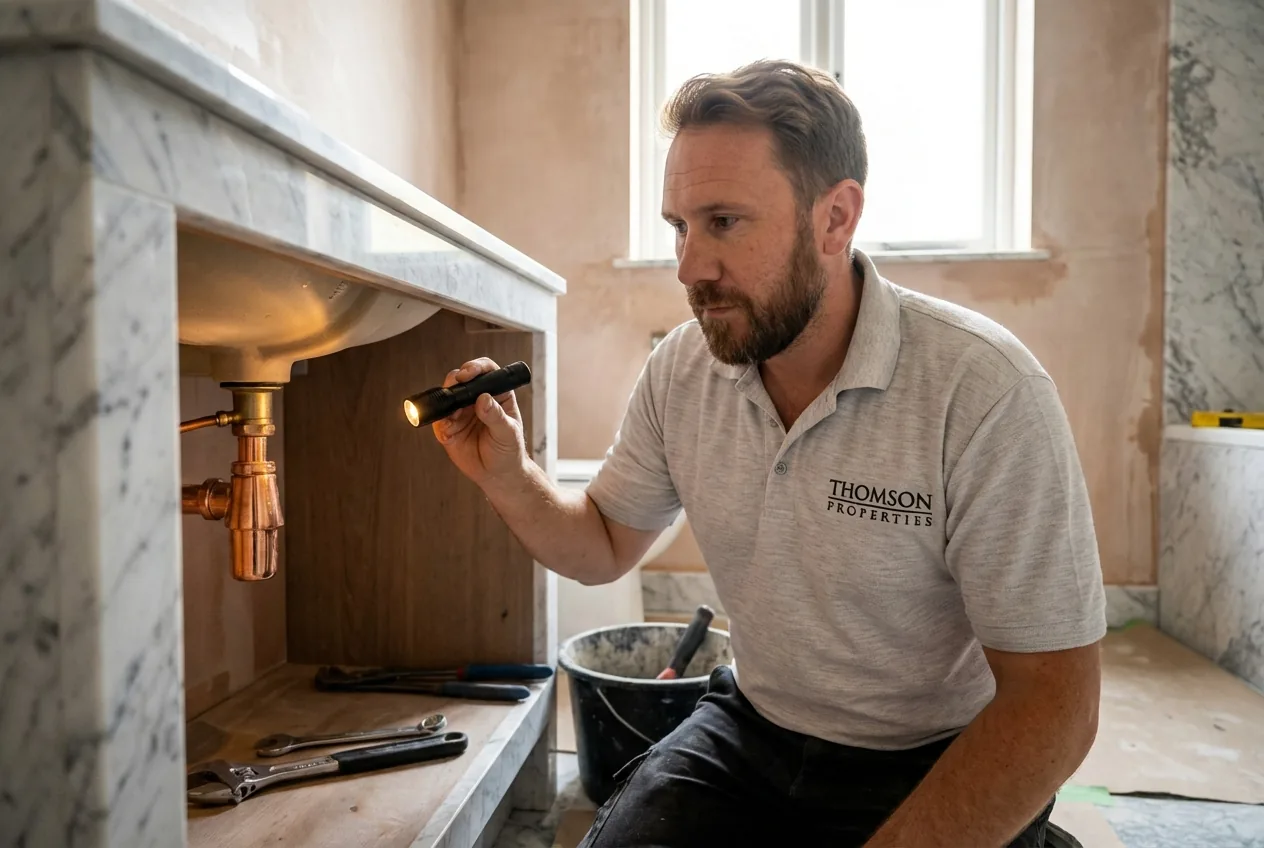
Before any pipework is concealed behind walls or tiles, we cap the system and fill it with water under pressure.
We check every single joint to ensure it is completely watertight.
This simple but vital test identifies potential issues immediately, ensuring they are resolved before they can ever become a problem for you.
Who This Level of Detail Is Not For
It is important to be transparent about what this level of “Seen and Unseen Quality” entails.
We know we aren’t the cheapest option, which, to be perfectly honest, is something we’re upfront about.
If your primary goal is to get the lowest possible price for a bathroom update, our approach may not be the right fit for you.
Correctly preparing substrates, using proprietary tanking systems, and taking the time to pressure test every joint requires high-quality materials and skilled labour.
To achieve a lower price point, some estimates may exclude specialist tanking or rely on standard materials in wet areas. While this keeps the initial cost down, it creates a significant difference in the long-term protection of your home.
While that approach saves money in the short term, we believe the risk of ripping out a bathroom two years later due to a leak is a false economy.
You can read more about the differences between a professional team and a one-man band to help you decide which route is best for your project.
Conclusion: Investing in Peace of Mind
A beautiful bathroom should be a source of relaxation, not anxiety.
At the end of the day, the difference between a bathroom that lasts for decades and one that fails in months is often like chalk and cheese.
It lies in the work you will never see: the waterproofing layers, the reinforced floors, and the pressure-tested pipes.
At Thomson Properties, we offer a three-year labour guarantee on all our new installations because we have total confidence in what lies behind the tiles.
We build bathrooms to last, respecting your investment and your home.
What should you do next?
If you are in Cranleigh or the surrounding areas and want a bathroom renovation built on solid foundations, we are here to help.