
Worried about living without a kitchen?
Let’s be honest.
Choosing a new kitchen is the exciting part.
Living without one for a few weeks? That’s the bit that makes most people nervous.
If you’re anything like the customers we meet every day, you’re probably not worrying about cabinet colours or worktops.
You’re wondering things like…
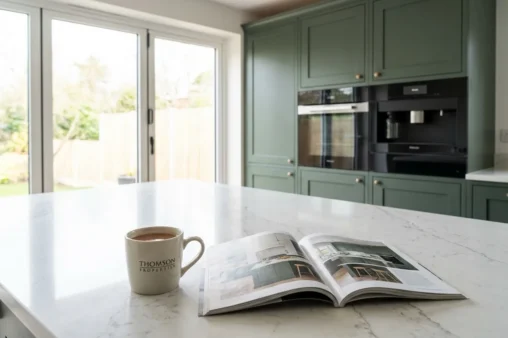
“Where am I going to make a cup of tea?”
“How will I feed the family?
“Will the whole house be covered in dust?”
“How long will I be without a sink?”
“Am I going to regret starting this?”
If any of those thoughts have crossed your mind, you’re certainly not alone.
After more than 20 years fitting kitchens across Surrey and Sussex, we’ve learnt that these are the questions that really matter.
Because you’re not just buying a new kitchen.
You’re trusting someone with your home while you continue living in it.
The good news is that, with a little planning—and a team who understands you’re living through a renovation, not just paying for one—it doesn’t have to feel overwhelming.
We’ve even been through our own kitchen renovation recently, so we know first-hand that the hardest part isn’t choosing your new kitchen.
It’s getting through the few weeks in between.
One thing customers often tell us afterwards is:
“It wasn’t as bad as we’d imagined.”
That’s partly because they planned ahead, and partly because we do everything we can to make life as easy as possible while we’re working in their home.
So before we talk about temporary kitchens, let’s start with the question we think is even more important…
How do we minimise disruption?
One of the biggest misconceptions about a kitchen refurbishment is that your whole home becomes a building site.
It doesn’t have to.
You’re still living in your home, and we never lose sight of that.
While you’re planning your temporary kitchen, we’ll be working hard to make everyday life as comfortable as possible.
That means we:
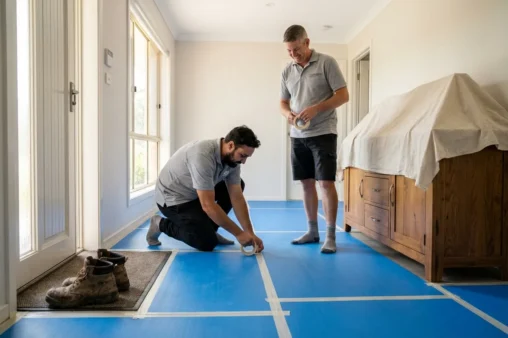
- Seal the work area with heavy-duty dust protection.
- Protect your floors and walkways.
- Keep tools and materials organised and tidy.
- Clean and vacuum the working area at the end of every day.
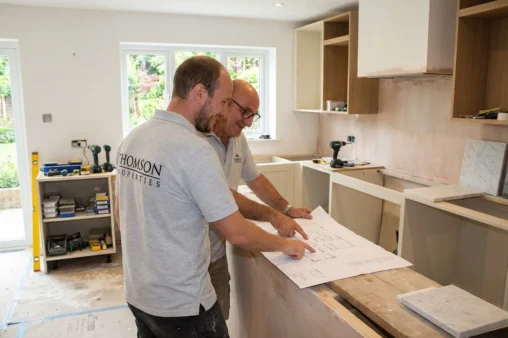
- Keep you informed about what’s happening next, so there are no surprises.
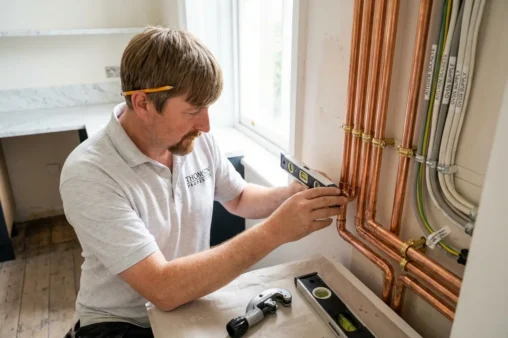
- We do everything we can to minimise the time you’re without a working sink, leaving your existing sink connected for as long as practical and fitting your new one as soon as possible.
They’re all small decisions in isolation, but they’re made with one goal in mind: helping you continue living comfortably in your home while we transform your kitchen.
Now let’s look at how you can make the next few weeks easier too.

Eight practical ways to make life easier during your kitchen renovation
1. Plan your temporary kitchen before work starts
The customers who cope best during a renovation are usually the ones who spend some time planning before we arrive.
Choose a space with power sockets, good ventilation and enough room for a small preparation area. A dining room, utility room or even part of a garage can work surprisingly well.
If possible, move your fridge or freezer there too (we can help with this if needed). Having everything in one place makes everyday life much simpler and keeps unnecessary foot traffic away from the work area.
Think of it as creating a smaller version of your normal kitchen.
A table, kettle, microwave, mugs, tea, coffee, chopping board and your everyday utensils are often all you need within easy reach.
It doesn’t need to be perfect.
It just needs to work short-term.
2. Keep cooking simple
It’s tempting to live on takeaways—but after a few days they become expensive and surprisingly repetitive (not to mention unhealthy!).
A microwave, slow cooker, camping stove or air fryer can keep you cooking proper meals throughout your refurbishment.
Before buying anything new, see what you already own or ask family and friends if they have camping equipment you could borrow.
During our own kitchen renovation, we used a camping stove every day and it worked brilliantly. We also managed to borrow a small portable mini oven part-way through which really helped offer some variety to what we could cook. It also saved us buying appliances we probably wouldn’t have used afterwards.
3. Think about washing up before you need to
This is probably the question we’re asked most often.
“When will I lose my sink?”
It’s a fair question, and from a personal perspective, it was our biggest practical concern too.
You can survive without an oven for a while.
Living without running water is much harder.
Whenever practical, we’ll leave your existing sink connected until the very last possible moment. It might only be an extra day or two, but we’ve found those small things make a huge difference.
If there does come a point when your sink has to be disconnected, we’ll always let you know in advance, and we can sometimes connect it temporarily overnight to allow you to use it, and then we might need to disconnect it during the day to continue the project.
A large washing-up bowl positioned close to another hot water supply (perhaps in a utility room) usually works well.
Some customers also choose to use compostable disposable plates and cutlery for a few days to make life a little easier.
4. Cook for your future self
One of the simplest things you can do before work starts is fill your freezer.
A few homemade meals prepared in advance can remove a surprising amount of stress later.
Soups, curries, casseroles, pasta bakes and stews all freeze well and can be reheated with very little effort.
When you’ve had a long day, you’ll be very glad you planned ahead.
5. Get organised before day one
Spend a little time thinking about what you’ll use every day.
Then make those things easy to find.
Clear storage boxes, labels and stackable containers can save endless rummaging through cupboards or boxes while your kitchen is out of action.
A small trolley or shelving unit can also become surprisingly useful for keeping everything together.
Like most things during a renovation, a little preparation saves a lot of frustration.
6. Create a space that feels normal
Your temporary kitchen doesn’t have to feel like camping.
Add a lamp if the room is dark.
Keep your favourite mug nearby.
Have somewhere comfortable to sit while eating breakfast.
These little touches won’t change the renovation—but they can make the weeks feel much more manageable.
7. Make the most of good weather
If the British weather cooperates, take advantage of it.
A barbecue or portable stove can take some pressure off your temporary kitchen and turn dinner into something a little different. You can even add an outdoor washing up station.
Sometimes embracing the temporary nature of the situation makes the whole experience feel easier.
8. Remember—you don’t have to figure it all out on your own
One thing we’ve learnt after fitting hundreds of kitchens is this:
Customers don’t just remember the finished kitchen.
They remember how they felt while their home was being transformed.
That’s why we’re always happy to help you think through the practical side of your refurbishment before work begins.
Not sure where your temporary kitchen should go?
Wondering when you’ll lose your sink?
Unsure what needs clearing before the first day?
Just ask.
Sometimes a ten-minute conversation before your project starts removes weeks of unnecessary worry.
A final thought
A kitchen refurbishment will always bring a little disruption.
We’d never pretend otherwise.
But it shouldn’t feel chaotic or stressful.
With a bit of planning, realistic expectations and a team who genuinely cares about how you live while the work is taking place, most customers find the experience far easier than they expected.
Our aim isn’t simply to leave you with a beautiful new kitchen.
It’s to make the journey there as smooth, organised and stress-free as possible.