It’s probably the single biggest fear every homeowner has when planning a new kitchen or bathroom: the budget blowout. You’ve saved up, planned, and got your quotes, but in the back of your mind, there’s a nagging worry about “hidden extras.”
We understand that anxiety. To help you feel confident and in control, here are the key things to know:
- “Hidden extras” fall into two categories: legitimate unforeseen issues (like rotten joists) and illegitimate charges often from vague quotes.
- Legitimate issues like rotten subfloors or old/poor plumbing are often impossible to see until the rip-out begins, but must be fixed to ensure quality.
- A vague, one-line quote is a major red flag. A professional estimate is always detailed and itemised with approval before any significant work proceeds.
- A trustworthy company will have a clear, written process (like our Charter Document) for handling any extra costs, which requires your written approval before any significant additional work proceeds.
We know from experience that this anxiety is one of the main reasons clients feel “on edge” at the start of a project. They’ve all heard horror stories from friends about a renovation’s cost doubling halfway through.
We get it. A renovation means inviting a team into your home, your sanctuary, and our entire process is built around how to find a builder who will genuinely respect your home.
It’s a valid concern, and to be perfectly honest, it’s one we understand. In our industry, “hidden extras” generally fall into two very different categories.
The first is Legitimate Unforeseen Issues. These are genuine problems (like rotten joists or old plumbing) that are physically impossible to see until the old room is ripped out.
The second is Illegitimate or Vague Charges. These are costs a less reputable fitter knew about—or should have—but chose to leave out of the initial quote to make their price seem lower.
Understanding the difference between the two is the key to protecting yourself and having peace of mind.
Legitimate Unforeseen Costs: What’s Hiding in the Walls?
When we take on a refurbishment, we are often dealing with the legacy of work done 20, 30, or even 40 years ago. Until we’ve taken the room back to its bare bones, no one can know for certain what’s underneath.
These are the most common legitimate issues we find:
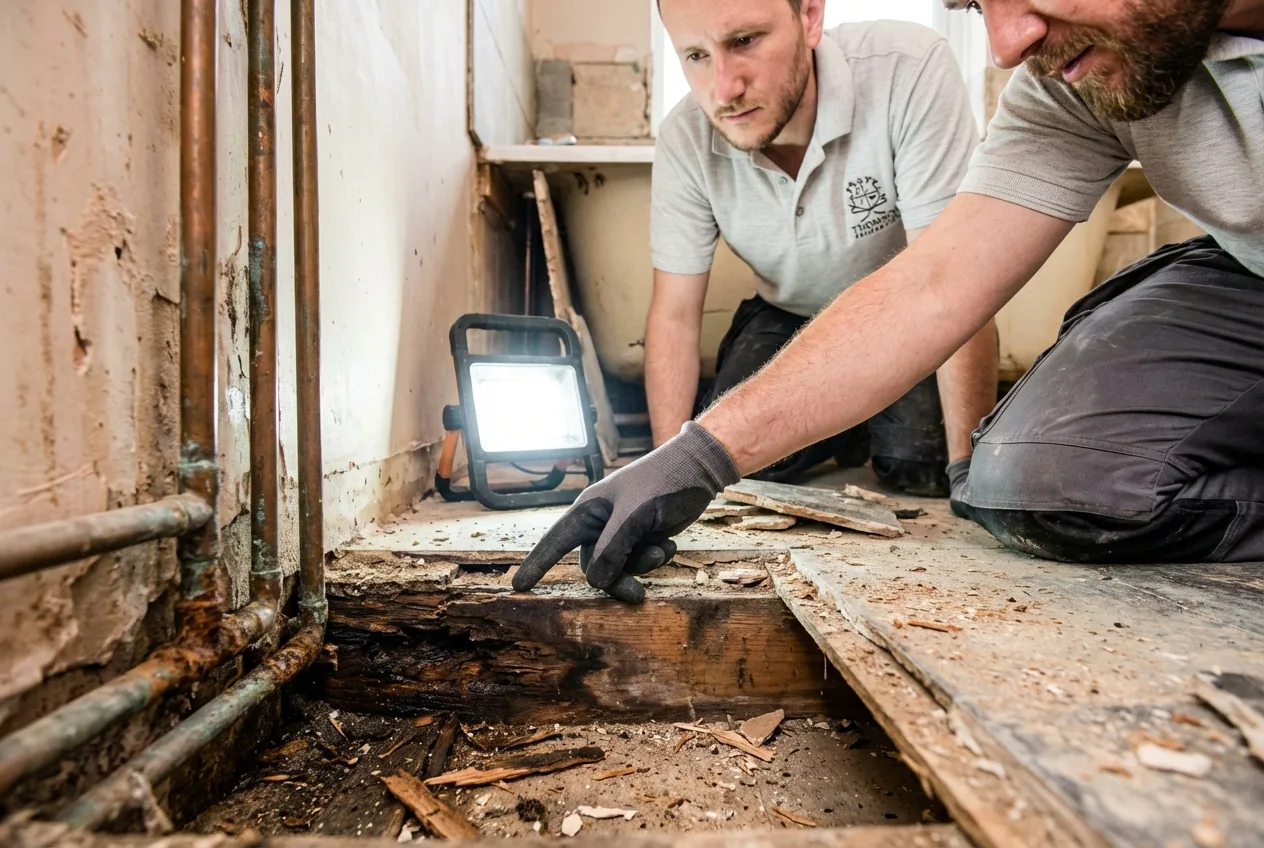
- Rotten Subfloors or Joists: This is the number one discovery, especially in bathrooms. A tiny, slow leak from an old shower tray or toilet waste pipe, invisible for years, can cause timber joists and floorboards to become soft and rotten. (This is one of the most common causes of hidden bathroom leaks).
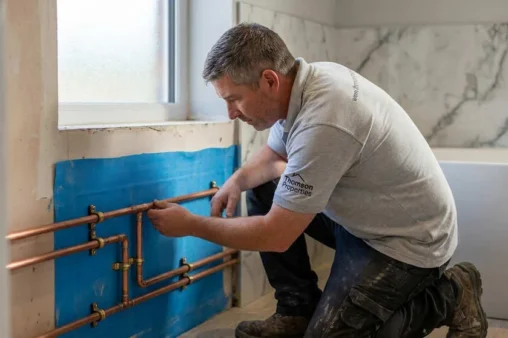
- Outdated or Faulty Plumbing: We often uncover corroded copper pipes, or poorly-installed waste pipes that don’t have the correct “fall,” causing slow drainage and blockages.
- Unsafe Electrics: Building regulations have changed dramatically. It is common to find old wiring that lacks adequate RCD protection or simply cannot handle the load of a new electric shower, underfloor heating, and LED lighting.
- Damaged Plaster: When we remove old tiles, they can sometimes pull away large sections of the underlying plasterboard or sub wall. You cannot tile over a damaged or unstable surface, so the walls must be re-boarded or re-plastered to ensure a perfect finish.
- Asbestos: In homes built or refurbished before 2000, there is always a chance of finding asbestos-containing materials (ACMs) in places like old floor tiles, ceiling coatings, or insulation boards. If suspected, work must stop in that area immediately and a sample be sent off for testing.
From our point of view, finding these issues isn’t about adding costs; it’s about doing the job correctly so your new installation is safe, secure, and built to last.
How Much Can These Legitimate Extras Cost? (Honest Ballpark Figures)
This is the part everyone worries about, but we believe in being upfront. While every job is different, here are some honest, conversational ballpark figures for what these common fixes might cost.
While we often handle minor tweaks, we simply cannot absorb the cost of a full day’s extra work. However, we handle this with a clear, pre-agreed process (more on that below).
- Replacing a Rotten Subfloor: If we discover a rotten subfloor in an average-sized bathroom, the fix typically involves a day’s labour to cut out the old floor, strengthen the joists, and lay new plywood. For a proper, guaranteed fix, you would be looking at roughly £520 + VAT.
- Re-plastering a Wall: If a wall is in bad shape after the old tiles come off, getting it skimmed or re-boarded might cost £150 – £300 + VAT, depending on the size and condition.
- Plumbing or Electrical Upgrades: These can vary the most. Replacing a section of old pipework might only take an hour or two. However, if old wiring is found to be unsafe, a partial rewire of the room could take several hours and cost several hundred pounds. If a complete replacement of the consumer unit for the property is required then this would normally cost between £700 and £900 + VAT for all labour, the new unit and materials. (If you’d like our electrician to visit and inspect your existing consumer unit prior to us starting, we’d be more than happy to arrange for a visit).
I suppose the key thing isn’t just the cost, but knowing that a professional team will have a clear, transparent way of dealing with it.
A good rule of thumb is to keep a contingency fund of 10-15% of your total project budget set aside for these genuine unknowns. It gives you complete peace of mind to know you are prepared for any possibility. These figures relate to unforeseen extras. For a complete overview of the total project costs, you can read our detailed guides on what to budget for a quality bathroom refurbishment and what a full kitchen refurbishment realistically costs.
Illegitimate “Extras”: Red Flags to Spot in a Vague Quote
This category is different and, in our view, unacceptable. These are “extras” that result from a vague or misleading quote, designed to lure you in with a lower price.
This is a classic “cowboy builder” tactic and a huge red flag. It’s a key difference when comparing a professional team vs. a one-man band.
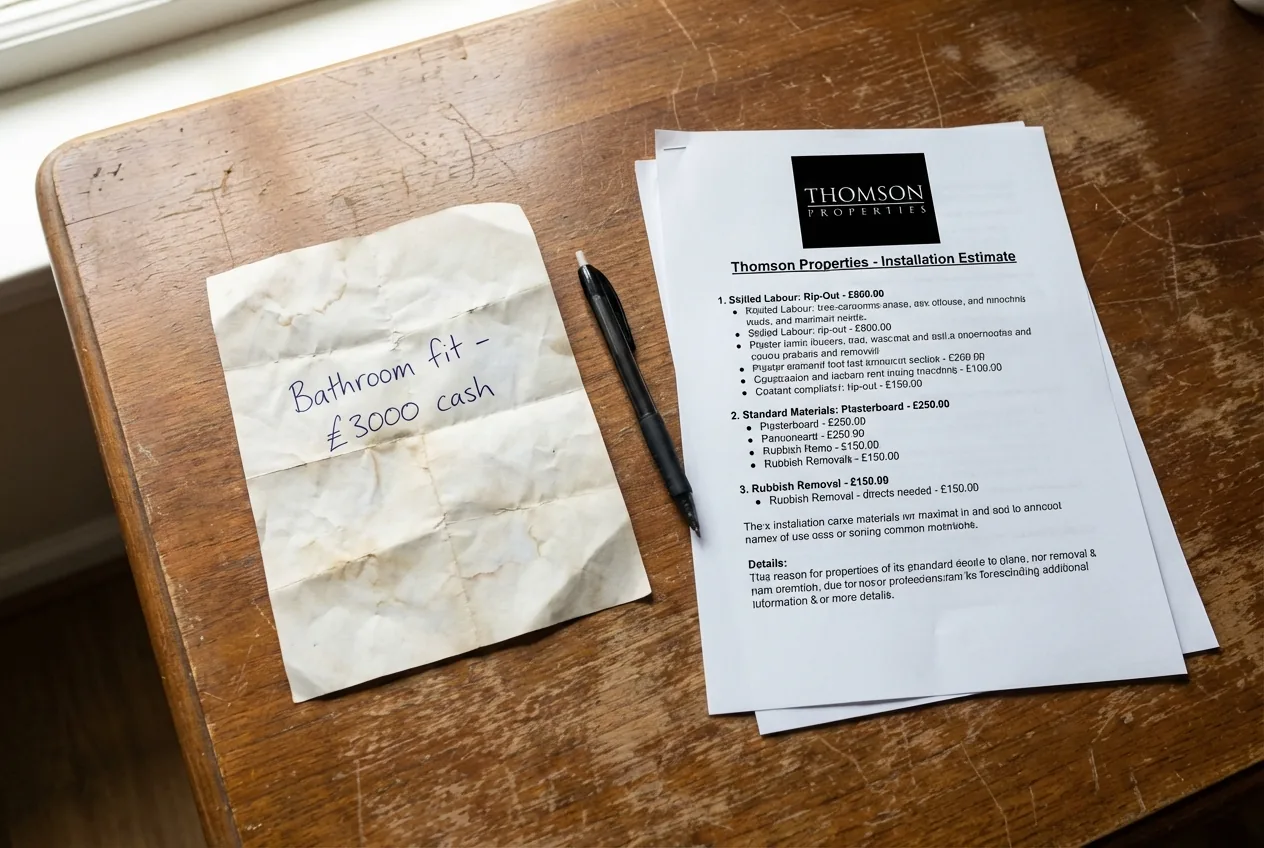
- The Vague One-Liner: If your quote just says “Bathroom fit – £3,000,” run. A professional estimate is a detailed document listing all the stages of work.
- Ambiguous Phrases: Look for phrases like “make good walls.” What does that mean? Does it mean plastering? Or just patching? We plaster walls to a “builders finish”.
- No Mention of Rubbish Removal: This is a classic. You get to the end of the job, and the fitter adds £300 for the skip. A professional quote, like ours, includes all rubbish removal fees from the start.
- No Clear Process for Unforeseen Costs: If the quote doesn’t explain exactly how potential extras will be handled, you can be left exposed. It leaves the door wide open for them to name any price they want mid-project, knowing you’re in a difficult position.
At the end of the day, a quote that looks too good to be true, or one that’s short on detail, is often the most expensive one in the long run.
Our Process: How We Handle Unforeseen Costs Transparently
We believe customers don’t like surprises. That’s why our Charter Document, which every client signs, outlines the exact, transparent process for everything. It explains precisely how we handle unforeseen issues, just as it details our fair deposit and payment schedule. This level of transparency is key to knowing you can trust the team in your home.
Here is our non-negotiable process:
First, the moment we discover a significant issue (like a rotten sub floor), we stop work on that area. We never just “plough on” and add it to the final bill.
Second, we inform and explain. We will contact you immediately, often with photos or a video, to show you exactly what we’ve found. We will then explain in plain English why it’s a problem and what we recommend as the correct solution.
Third, we provide a written quote. We will then provide a clear, written quotation for the additional remedial work. This will show the exact cost for labour (based on our standard hourly/day rates) and any materials needed.
Finally, we wait for your approval. We will not proceed with this significant work until we have received your written consent. This is our golden rule. It ensures you are always in complete control of the budget, with no nasty surprises.
This process is fundamental to how we work. It removes the anxiety from the unknown and ensures you are always in charge of the budget.
For minor issues (which we class as under £200 + VAT), if you are unreachable, we may proceed with the work. We do this only to avoid holding up the entire project timeline for a small fix, but we will always inform you at the earliest opportunity.
At the end of the day, a professional fitter isn’t someone who promises you’ll never find a problem. A true professional is someone who has a clear, fair, and honest process for dealing with it when you do.
Ready for a Renovation Without the Nasty Surprises?
If you’re in Cranleigh or the surrounding areas and want to discuss your kitchen or bathroom project, we’re here to help.
Give our friendly office team a call for a no-pressure chat and a free, no-obligation estimate.
Phone: 01483 272440 / 01403 752857
Email: [email protected]